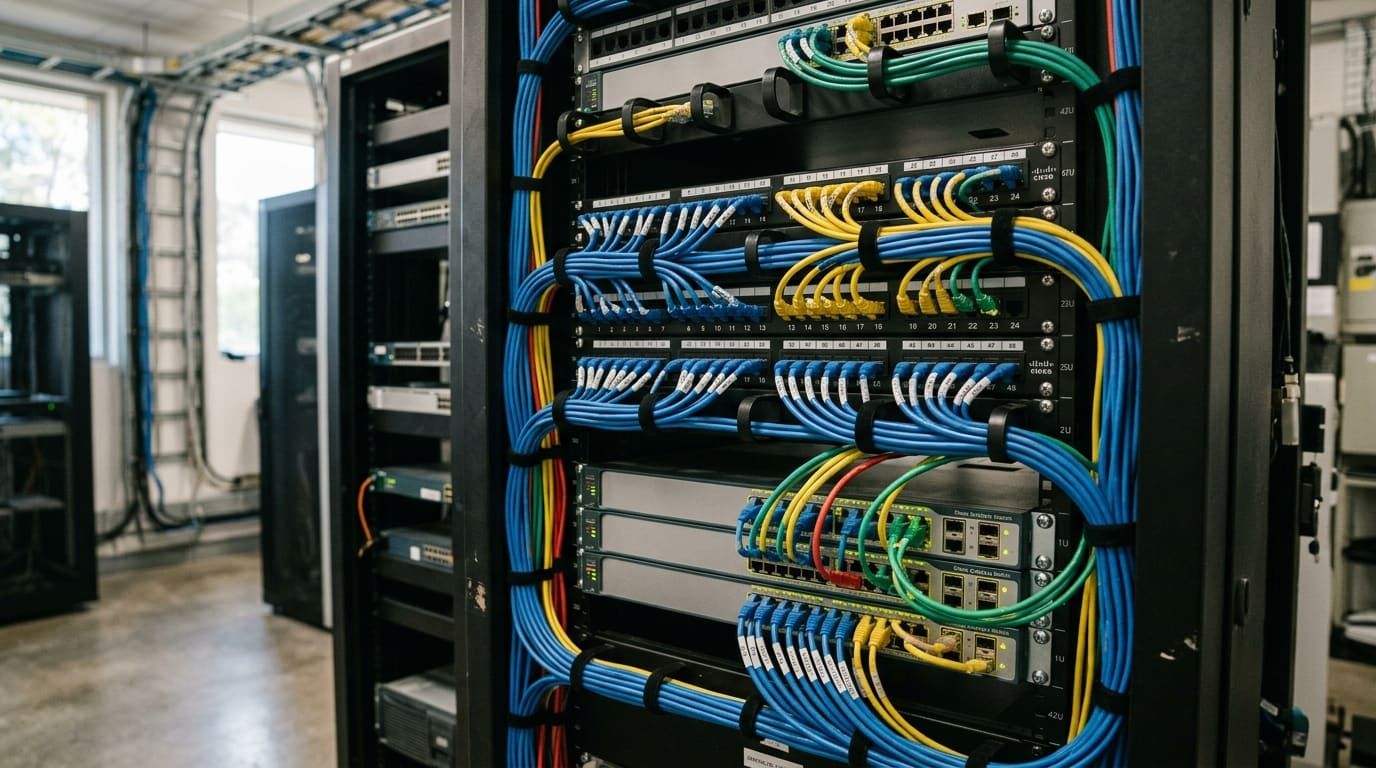
Almost every commercial building has one room the business can’t trade without: the server room, the comms room, the MDF. It holds the network, the file servers, the phone system, and often the recording gear for the CCTV. It’s also frequently secured by a standard office lock and a key that half the building has copied.
If you’re responsible for a server room in Brisbane, here’s what proper access control for that room looks like, and how to get there without taking anything offline.
Why a Server Room Isn’t Just Another Door
A normal office door controls who can walk in. A server room door has to answer harder questions: who went in, when, how long they stayed, and whether they were supposed to be there at all. That matters for a few reasons:
- Outages and tampering. A single unplugged cable or a rebooted server can cost more than the lock that would have prevented it.
- Contractors and visitors. Cleaners, IT providers, electricians and telco technicians all need occasional access, and none of them need it permanently.
- Audit and compliance. If your organisation works towards ISO 27001 or answers to a client security questionnaire, you’ll be asked to show physical access controls and the records behind them.
A mechanical key can’t answer any of those questions. A properly configured access control system can.
The Building Blocks
Stronger credentials at the room entry
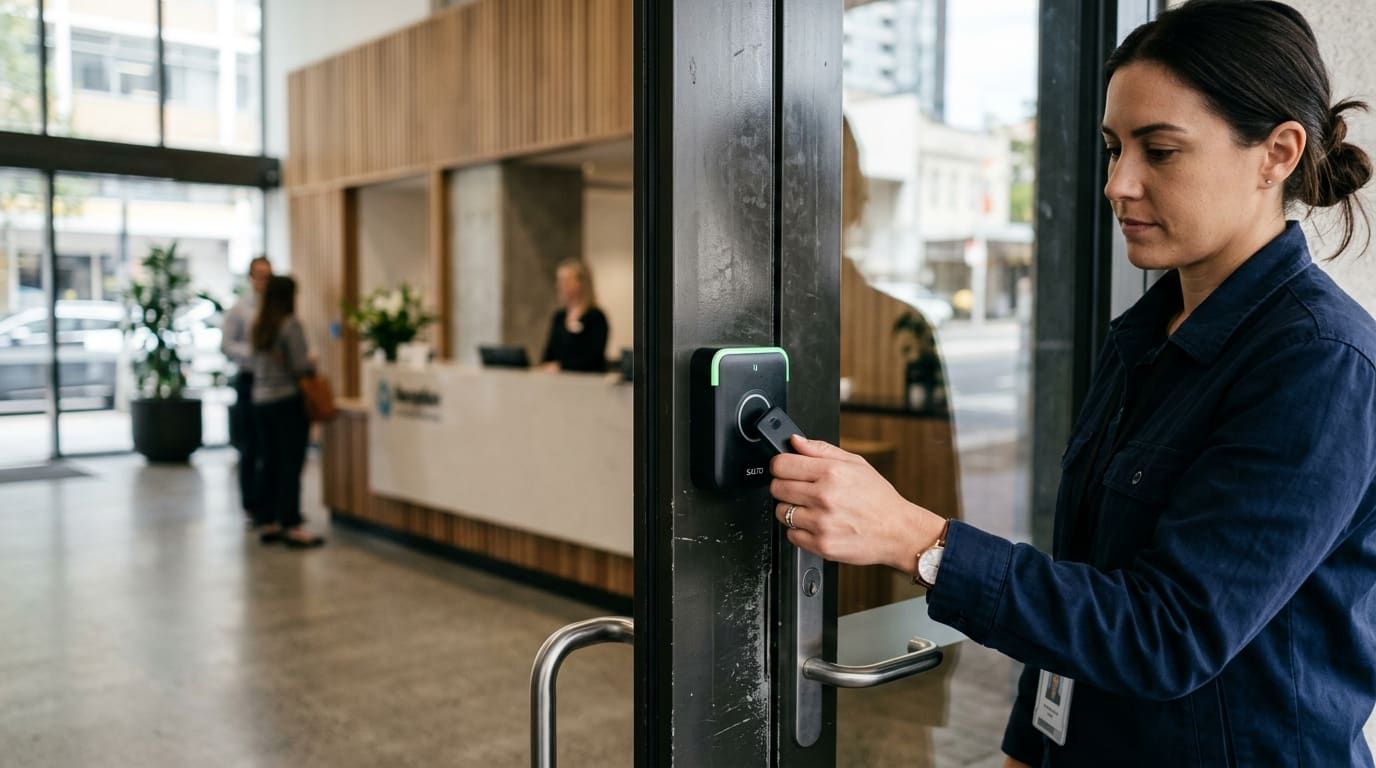
Cards and fobs are fine for a general office door, but a server room usually warrants more. Common options are card plus PIN, or card plus a biometric check such as facial recognition, so a lost or borrowed card isn’t enough on its own. For higher-consequence rooms, this two-factor approach is increasingly standard.
Schedules, not permanent access
Rather than handing out standing access, a good system gives each person only the hours and doors they need. The IT team might have 24/7 access; a contractor gets a four-hour window on the day of the job, and it expires by itself.
An audit trail you can actually use
Every entry, denied attempt and door-held-open alarm should be logged against a named person. The test of a good setup is whether you can answer “who was in the room on Tuesday afternoon?” in a couple of minutes, not by digging through key registers.
CCTV that matches the log
Pairing the door with CCTV and video management means an access event and its footage live in the same place. If a door alarm triggers at 2am, you can see who it was rather than guess. Coverage should include the aisle and the cabinet faces, not just the doorway.
Rack-level locking
For rooms shared between teams, or where tenants or third parties host equipment, controlling the room door isn’t enough. Electronic rack handles, such as those available through SALTO, extend the same credentials and logging down to the individual cabinet.
Retrofitting a Live Room
Most server room work isn’t a greenfield build. It’s adding control to a room that’s already running. A competent integrator will plan around that: staging the work, keeping existing systems live until the new door is proven, and reusing sound cabling rather than ripping it out for the sake of it.
It also pays to check whether the room can be added to an access control platform that’s already in the building. Extending an existing Gallagher or Integriti system is usually simpler and cheaper than running a second, separate one. If the current system is old or unsupported, a security system takeover can fold it into something maintainable.
Don’t forget the physical side. Fire egress rules still apply to the door, and the locking method has to be chosen door by door. The same goes for cabling, power backup and what happens to the door when the network drops.
Questions to Ask a Brisbane Integrator
- Which platforms are they certified on, and will the system tie into what’s already in the building?
- How will the cutover be staged so the room stays in service?
- Can the audit reports be produced by your own staff without calling the integrator each time?
- What response time is written into the maintenance agreement if a reader fails?
- Is the CCTV retention period long enough for your own policies?
Where This Fits at Bravis
Server rooms, comms rooms and data halls are covered on our data centre and server room security page, and our Private Vaults Australia project shows what layered credentials, VMS and biometric entry look like on a high-consequence site.
If you’ve got a server room that’s still on keys, or a system that no longer does what you need, get in touch and we’ll walk through what it would take to secure it properly.