
Government sites don’t buy security the way a retail tenancy does. A council depot, a state agency office, or an operational police facility has an access hierarchy to enforce, audit obligations to meet, and a building that usually can’t close while the work gets done. The electronic security integrator you choose has to deliver against all of that, and still be answering the phone ten years later when the system needs its next upgrade.
Here’s what separates an integrator that’s genuinely ready for government work from one that’s simply installed cameras in a government building before.
Accreditation Is the Entry Ticket, Not the Differentiator
For Queensland government and regulated-sector work, the baseline is well understood: a current Queensland Security Firm Licence, GITC accreditation, and quality assurance that stands up to procurement scrutiny. If a provider can’t produce those quickly, they’re not ready for a government tender.
But every shortlisted integrator will clear that bar. The questions that actually separate them come next:
- Have they delivered at comparable scale? Ask for completed government or public-sector projects with door counts, camera counts and project values, not just logos.
- Are they certified on the platforms you run? Government estates tend to standardise on enterprise platforms like Gallagher, Inner Range Integriti, Avigilon, Milestone and WinDSX. Manufacturer certification means firmware access, vendor escalation paths and warranty support that stay intact.
- Can their people meet your site’s personnel requirements? Some facilities require vetting or site-specific inductions for anyone working on security systems. Raise it at the start, not the week before mobilisation.
Integration Across Systems, Not Just Installation
A government facility rarely runs a single system. It runs CCTV, access control, intercoms, duress, alarms and often ANPR, usually installed at different times by different providers. The value of an integrator over an installer is designing those as one platform. A forced door calls up the nearest camera, access events and video sit in one audit trail, and the control room works from a single interface instead of five.
That matters for more than convenience. When an incident review or an internal audit asks who entered a secure area and when, the answer should come from one system, with footage attached, in minutes.
Delivering in Buildings That Can’t Close
Most government security work happens in occupied, operational buildings. The integrator’s methodology matters as much as the hardware list:
- Staged cutovers floor by floor or zone by zone, so secure areas are never left uncontrolled.
- Parallel running of old and new access systems during migration, with credentials enrolled before the old readers come off the wall.
- Clear change control with the facility’s security manager, so nothing goes live without sign-off.
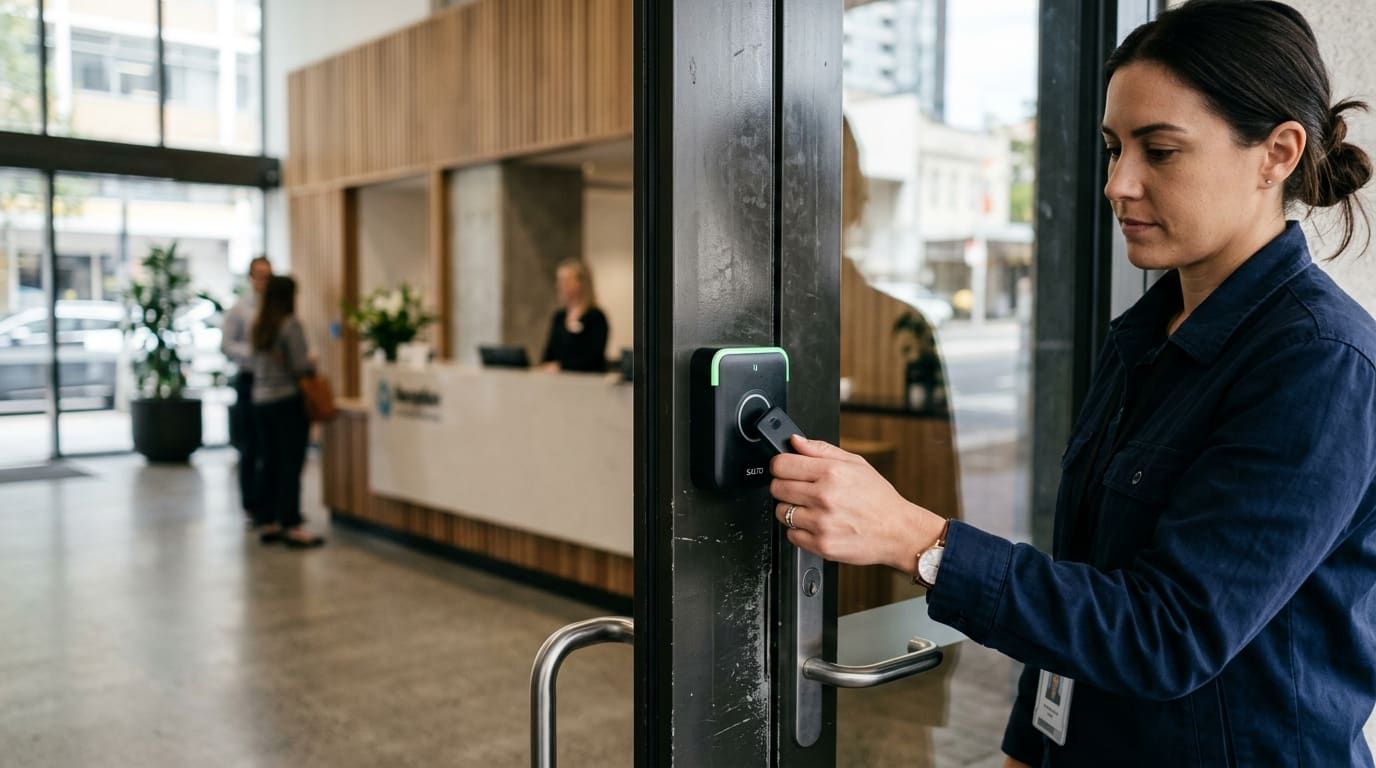
Bravis delivered a full security fitout of Queensland Police’s Brisbane City Station: 17 floors and 3 basements, 90+ doors of Inner Range Integriti access control, 50+ Axis IP cameras on Milestone, IP intercom and ANPR boom-gate entry. The station has a strict access hierarchy, and the access control design had to work floor by floor.
Scale Beyond a Single Building
State-level agencies often need to see video from well beyond their own walls. At the State Police Operation Centre, Bravis consolidated video from more than 8,000 cameras across Queensland into a single operations platform. That platform supports disaster response, major events and incident coordination from one room. We’ve supported that site since the G20 installation in 2014.
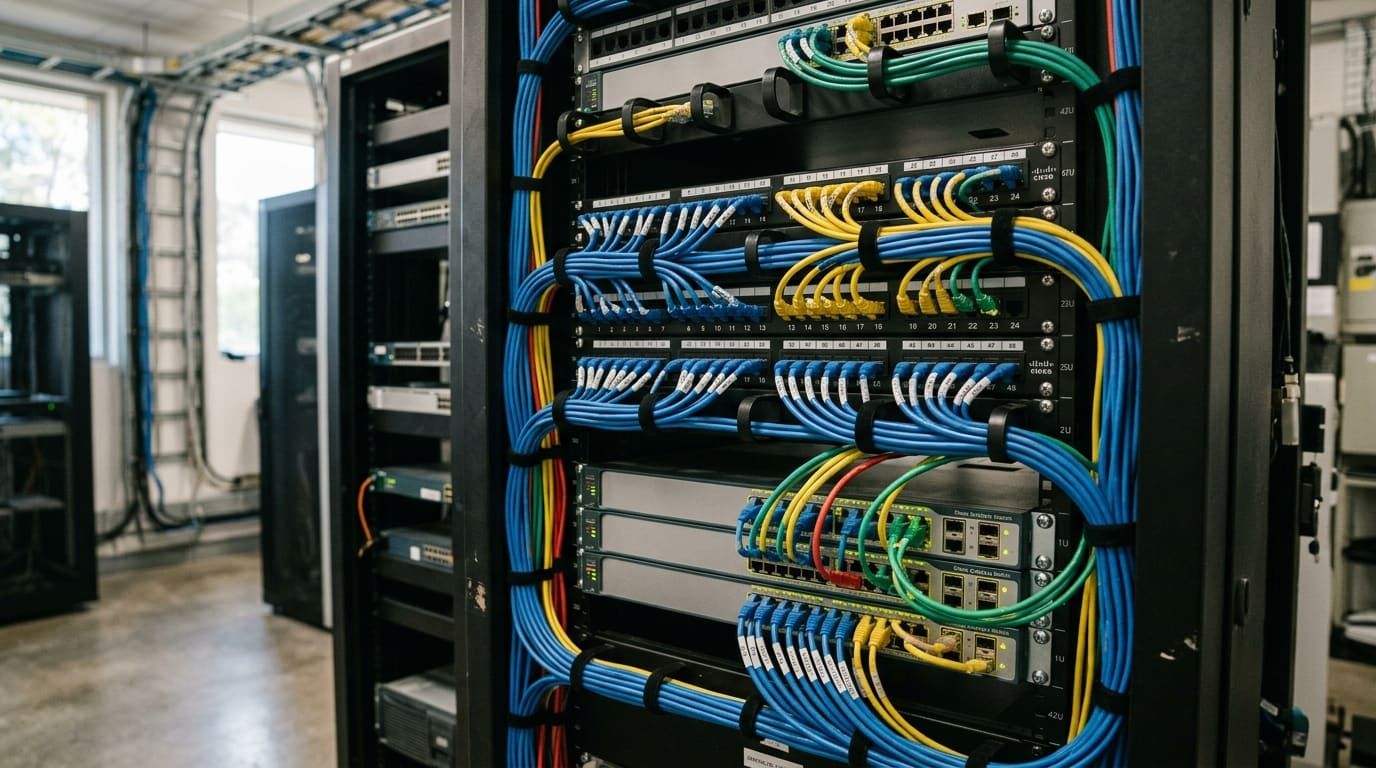
Work at that scale depends as much on network infrastructure and video management design as on the cameras themselves. Ask any integrator how they’d handle bandwidth, storage and failover before they talk about camera models.
Planning for the Whole Lifecycle
Government assets run for a long time, often well past the support life of the hardware in them. A good integrator plans for that from day one:
- Supportable platforms chosen with a long vendor roadmap, not whatever was cheapest on the tender.
- Documented as-builts so the next upgrade doesn’t start with a site audit to work out what’s in the ceiling.
- Staged lifecycle upgrades that replace obsolete components without a full rip-and-replace.
If you’ve inherited a system from a previous provider, a structured security system takeover can bring it under proper support without disrupting operations.
Talk to a Queensland Government Security Integrator
Bravis Security has worked with Municipal, State and Federal clients for over 15 years. We’re a Queensland-licensed, SPAAL-member, GITC and Q Assure accredited integrator, and a certified partner across Avigilon, Milestone, Gallagher and Inner Range. See our government security solutions, or contact us to talk through an upcoming project, tender or upgrade.