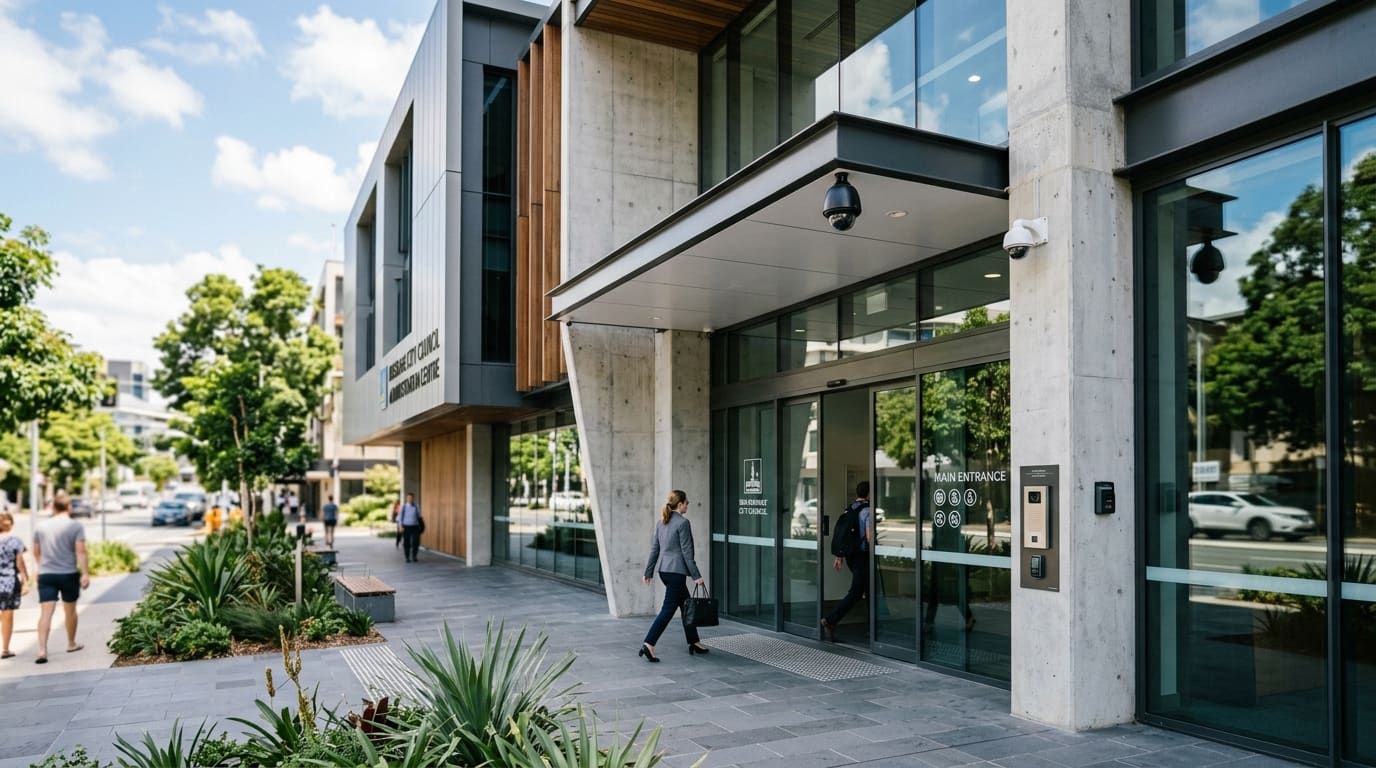

Brisbane East — Capalaba, Cleveland, Wynnum, Manly, and the Redlands corridor through to the bay islands — has its own mix of industrial estates, retail strips, schools, and high-rise developments, all with different security requirements. Most businesses in the area end up comparing quotes from providers based in the Brisbane CBD or interstate, dispatching a technician when one happens to be in the area. That works fine until something breaks on a Friday afternoon.
What an Integrator Actually Does Differently
An installer who only knows one product line can sell you a good camera or a good door reader. A commercial security integrator designs CCTV, access control, alarm monitoring, and intercoms as one connected platform, so a forced door triggers the nearest camera, alarms and access logs sit on the same dashboard, and a new site plugs into the systems you already run. That’s the difference that shows up six months in — when systems that were never designed together stop talking to each other and nobody can explain why.
What an Electronic Security System Actually Includes
“Electronic security system” gets used loosely to describe anything from a single doorbell camera to a fully networked platform covering a whole site. In practice it’s any combination of these, designed to talk to each other rather than sit as separate boxes:
- CCTV and video management — cameras plus the platform that records, stores, and lets you search footage.
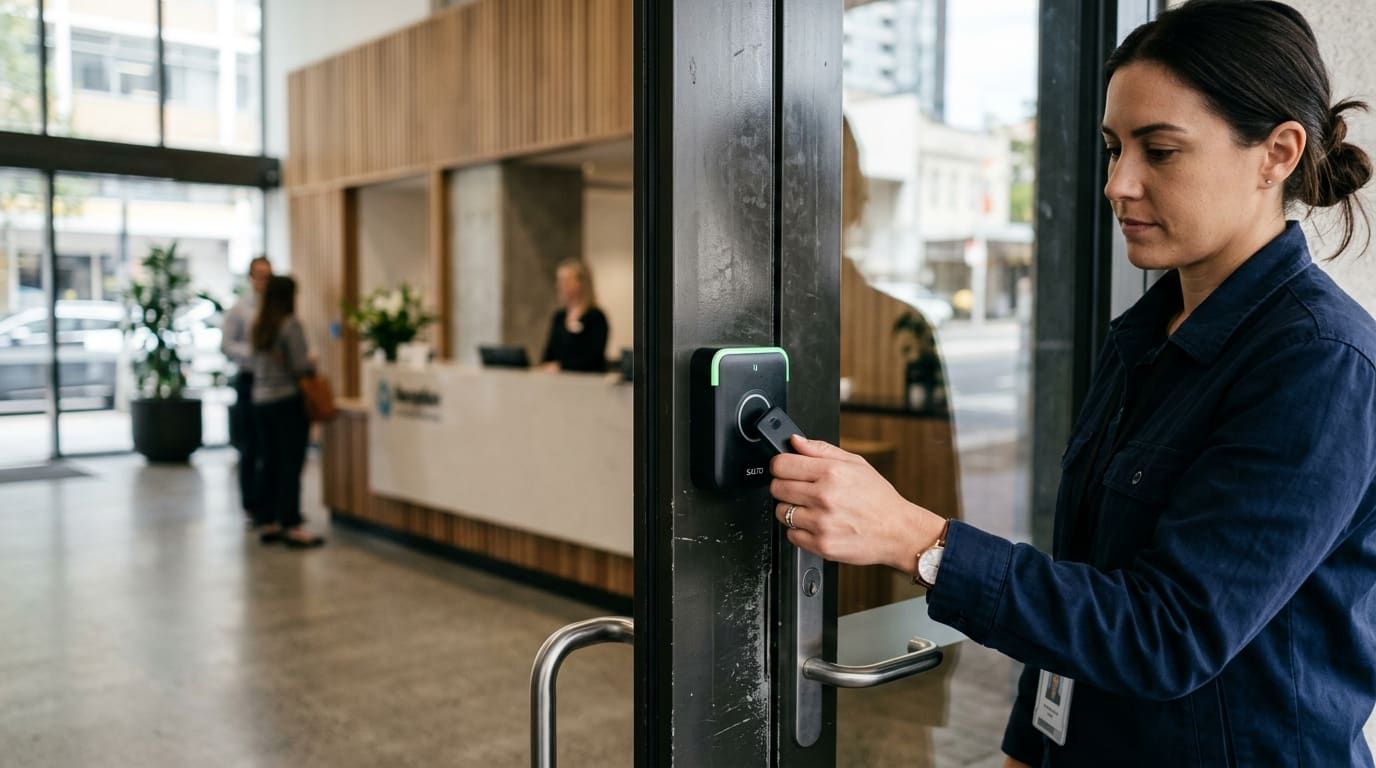
- Access control — swipe cards, fobs, or mobile credentials controlling who can open which door, and when.
- Alarm systems — intrusion detection and monitored alerts for after-hours and perimeter breaches.
- Intercoms — video or audio entry control for reception areas, loading docks, and tenancy entries.
- PA and paging — site-wide announcements and evacuation messaging, common on larger industrial and retail floors.
Buying more system than a site needs is a common way businesses overspend — a five-camera retail tenancy in Capalaba Central doesn’t need the same platform as a 3,000m² distribution centre in Carindale, even though both are legitimately “electronic security systems.” Getting that scope right up front is most of what a proper design consultation is for.
What “Local” Actually Changes
Being headquartered in Brisbane East rather than the CBD or interstate isn’t a marketing point — it changes three practical things:
- Response times. A technician based in Capalaba reaches a site in Cleveland or Wynnum in minutes, not after a drive across the city.
- Site knowledge. A local integrator who’s worked across the Bayside industrial estates already understands common building stock, common power and network setups, and the sites they’ve serviced before.
- Accountability. When your provider’s office is a suburb away rather than an interstate call centre, escalation means a phone call, not a ticket queue.
Industries Along the Brisbane East Corridor
The mix of business types east of the city means security requirements vary block by block:
- Warehousing and light industrial around Capalaba and Carindale need CCTV and access control built for shift-based sites, with clear audit trails for stock movement.
- Retail strips in Cleveland, Victoria Point, and Capalaba Central need systems that deter theft without slowing down customers.
- Schools across the Redlands need monitored access and after-hours coverage that a facilities manager can actually operate.
- High-rise and multi-tenant developments springing up around Wynnum and the bayside precincts need swipe card and intercom systems that scale across multiple tenancies.
Taking Over an Existing System
A lot of Brisbane East businesses aren’t starting from scratch — they’ve inherited a system from a previous tenant, a strata handover, or a provider who’s stopped answering calls. A local integrator can walk onto site, assess what’s already installed, and tell you within a day whether it’s worth integrating or replacing, rather than quoting a full rip-and-replace by default because it’s the easier sale. Taking over an existing security system properly means understanding what hardware is still supportable, what’s obsolete, and what can be folded into a single platform without downtime while the transition happens.
What to Check Before You Sign
Being local isn’t enough on its own — the basics still apply. Check for a current Queensland Security Firm Licence, SPAAL membership, and certified partnerships with the platforms you’re actually being quoted (Gallagher, Avigilon, Milestone, and Inner Range are the ones to ask about). A provider who can show you completed commercial integration projects at a comparable scale to yours, not just single-system installs, is a reasonable filter for who to shortlist.
Ongoing Support Matters More Than the Install
The install day is the easy part. What actually determines whether a security system holds up is what happens six months later — when a camera drops offline, a door strike starts sticking, or a new staff member needs an access card issued on short notice. A Brisbane East-based integrator can get someone on site the same day for issues that would otherwise sit in a queue behind jobs closer to a CBD-based provider’s office. Ask any provider you’re comparing how faults are logged, what the actual response time commitment looks like in writing, and whether after-hours support is a real service or an answering machine.
Choosing Bravis
Bravis Security is a Capalaba-based commercial security integrator, servicing commercial, industrial, and government sites across Brisbane East and the wider South East Queensland region for years. We’re a Queensland-licensed, SPAAL-member, GITC and Q Assure accredited integrator, certified across Avigilon, Milestone, Gallagher, and Inner Range. If you’re comparing quotes for a site in Brisbane East, get in touch — our technicians are already in your area.